Ingredients
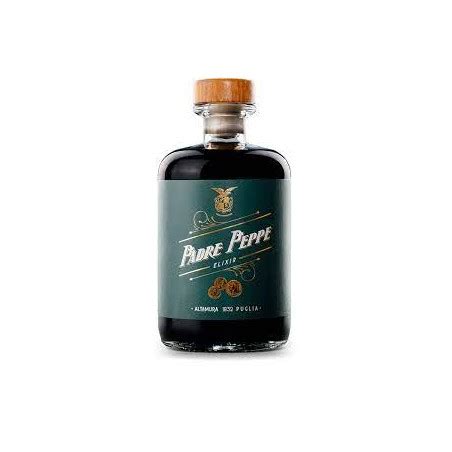
Built on green walnuts picked in early summer and macerated with herbs and spices — a nut amaro rather than a root amaro, closer in family to nocino than to Fernet.
- ✦Green walnut husks
- ✦Cinnamon
- ✦Clove
- ✦Bitter orange peel
- ✦Wormwood
- ✦Gentian
- ✦Mint
- ✦Anise
History of the Brand
Padre Giuseppe Ronchi, a Capuchin friar from Altamura known locally as Padre Peppe, treated the poor of the Murgia with herbal remedies in the nineteenth century, and his green-walnut elixir became the most famous of them.
After his death the recipe passed to lay hands in Altamura, where the same family has produced it commercially ever since, still harvesting walnuts locally in June.
For most of its life it stayed a Puglian regional bottle, the digestivo poured after Sunday lunch across the Murgia plateau.
Renewed international interest in nut liqueurs has pushed it onto specialist shelves abroad, usually alongside nocino and Nardini.
Tasting Characteristics
Green walnut skin, cinnamon and clove, a whiff of cocoa and dried fig.
Rich and rounded, walnut and bitter cocoa over a moderate sweetness, with mint and anise cutting through.
Dry, tannic and nutty, with clove warmth that lasts.
Flavor meter
How to serve it
- 01Neat at room temperature after a heavy meal.
- 02Over one large cube with an orange twist.
- 03Poured over vanilla gelato, the classic Puglian dessert trick.
- 04In a Black Manhattan in place of the usual amaro for a nuttier version.
Where to Get It
Widely available across Puglia; abroad it is a specialist import found through Italian-focused retailers.
Italian specialty importers
The most reliable source outside Italy; expect $40–$55.
Online European retailers
Ship the 700ml bottle internationally where regulations allow.
In Altamura
Sold at the producer's shop in town, along with older reserve bottlings.
Where to buy Amaro Padre Peppe
We may earn a commission when you buy through these links, at no extra cost to you. See our affiliate disclosure.
Amaro Padre Peppe FAQ
What is Amaro Padre Peppe?
+
A walnut-based amaro from Altamura in Puglia, made to a nineteenth-century recipe attributed to the Capuchin friar Padre Giuseppe Ronchi.
What does it taste like?
+
Green walnut and bitter cocoa with cinnamon and clove, moderately sweet with a dry, tannic finish.
How is it different from nocino?
+
Nocino is sweeter and simpler; Padre Peppe adds bitter herbs and spices, so it drinks like an amaro built on walnut.