
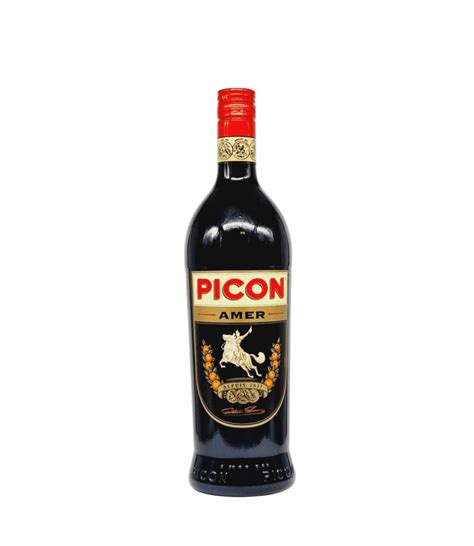
Ingredients
Fresh and dried bitter orange peel, distilled and macerated, married with gentian root, cinchona bark, caramel and sugar syrup.
- ✦Bitter orange peel
- ✦Gentian root
- ✦Cinchona bark
- ✦Caramel
History of the Brand
Gaétan Picon, a French soldier stationed in Algeria, blended the first batches in 1837 to make quinine palatable against fever.
Production moved to Marseille and then Paris; by the belle époque Picon was a fixture of French café life.
The strength was cut from 39% to 21% and finally 18%, and the modern French bottlings — Picon Bière and Picon Club — are sweeter than the nineteenth-century original.
Because it is not officially imported to the US, generations of American bartenders have chased substitutes for the Brooklyn and the Picon Punch of Basque Nevada.
Tasting Characteristics
Orange marmalade, caramel, faint medicinal root.
Sweet orange up front, then gentian and quinine bitterness and burnt-sugar depth.
Medium, sticky-sweet then dry.
Flavor meter
How to serve it
- 01Picon Bière: a splash in a glass of lager, the classic French bar order.
- 02In a Brooklyn cocktail with rye, dry vermouth and maraschino.
- 03Picon Punch with brandy, grenadine and soda.
- 04Long with soda and lemon over ice.
Where to Get It
Not officially imported to the US; easy to buy across France and neighbouring countries.
European supermarkets
Picon Bière and Picon Club sit on ordinary aperitif shelves.
Travel retail
The usual way Americans get a bottle home.
Substitutes
Amaro CioCiaro, Bigallet China-China or Golden Amer stand in behind US bars.
Where to buy Amer Picon
We may earn a commission when you buy through these links, at no extra cost to you. See our affiliate disclosure.
Amer Picon FAQ
Can you buy Amer Picon in the US?
+
Not officially — it is not imported, so bartenders use Amaro CioCiaro or Bigallet China-China instead.
What does Amer Picon taste like?
+
Candied bitter orange with caramel and a gentian-quinine bitterness underneath.
What is Picon Bière?
+
The French habit of pouring a measure of Picon into a glass of lager — the country's most common way to drink it.