Ingredients
Around twenty herbs and spices steeped in a linen sack in alcohol and Karlovy Vary spring water, then rested two months in oak. Only two people at a time know the full recipe.
- ✦Cinnamon
- ✦Cloves
- ✦Anise
- ✦Bitter orange peel
- ✦Ginger
- ✦Karlovy Vary spring water
History of the Brand
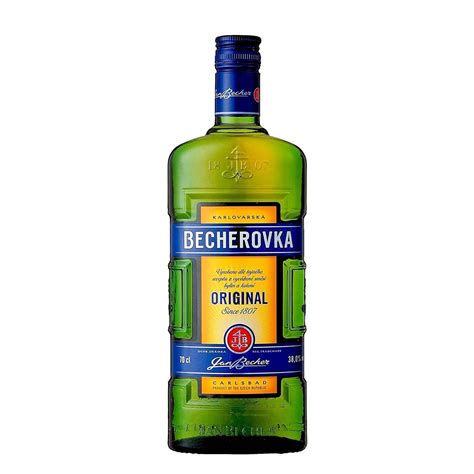
Created in 1807 in the spa town of Karlovy Vary by apothecary Josef Vitus Becher, working from a recipe attributed to the visiting English doctor Christian Frobrig.
It was sold initially as 'English Bitter' — stomach drops for spa guests taking the waters.
The flat green bottle and the 'thirteenth spring' nickname both date to the brand's spa-town identity: Karlovy Vary has twelve mineral springs.
It survived nationalisation under communism and is now the Czech Republic's best-known spirit after Pilsner.
Tasting Characteristics
Cinnamon, clove, gingerbread, orange peel.
Christmas spice and honeyed sweetness with a mild herbal bitterness behind.
Warming, spiced, gently drying.
Flavor meter
How to serve it
- 01Chilled neat in a small glass, the Czech default.
- 02As a Beton — Becherovka and tonic over ice with lime.
- 03Hot with water and honey in winter.
- 04In place of sweet vermouth in a spiced Manhattan.
Where to Get It
Widely exported; universal in central Europe.
Liquor stores
Stocked in most markets thanks to Pernod Ricard distribution.
Online retailers
Easy to find; look for the Lemond and KV14 variants too.
In Karlovy Vary
The Jan Becher museum sells the full range.
Where to buy Becherovka
We may earn a commission when you buy through these links, at no extra cost to you. See our affiliate disclosure.
Becherovka FAQ
What is a Beton?
+
Becherovka topped with tonic water over ice, usually with lime — the standard Czech long drink.
Why is Becherovka called the thirteenth spring?
+
Karlovy Vary has twelve mineral springs; the bitter, made with the town's spring water, was nicknamed the thirteenth.