
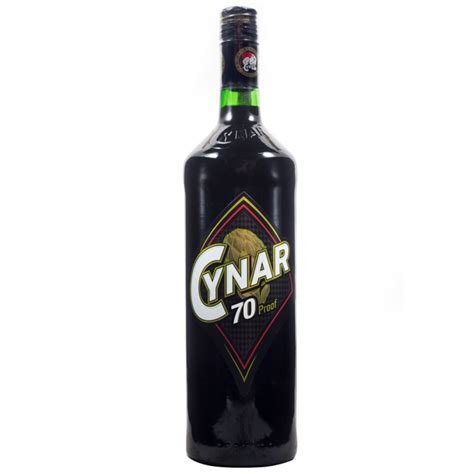
Ingredients
The same thirteen-botanical infusion as standard Cynar — led by artichoke leaf — bottled at more than double the strength so the bitterness carries through ice and mixers.
History of the Brand
Cynar arrived in 1952 as Angelo Dalle Molle's improbable idea: an amaro built around artichoke leaf, sold with an advertising campaign about combating the stress of modern life.
At 16.5% ABV the original is deliberately gentle, which made it a favourite for spritzes but a problem in stirred drinks, where it thinned out fast.
Campari answered in 2014 with Cynar 70, a 35% ABV version aimed squarely at bartenders who wanted the flavour without the dilution penalty.
It has since become the default Cynar behind serious cocktail bars, while the low-proof bottle stays the aperitivo-hour standard.
Tasting Characteristics
Cola nut, dried herbs, walnut skin and a faint green vegetal note.
Caramel and burnt sugar up front, then artichoke and gentian bitterness with far more grip than the original.
Long, dry and earthy, with cocoa and bitter greens.
Flavor meter
How to serve it
- 01In a Cynar Negroni, where it holds its shape against gin.
- 02Stirred into a Little Italy or Trident.
- 03On the rocks with an orange twist.
- 04In an Art of Choke, over crushed ice with mint.
Where to Get It
Widely distributed in the US and UK; less common in Italian supermarkets than the low-proof bottle.
Cocktail-focused bottle shops
The usual home for the 70-proof expression.
Online spirits retailers
Reliably in stock and often cheaper than the standard bottle by the ounce.
Italian grocers
Stock the 16.5% version far more often — check the label carefully.
Where to buy Cynar 70
We may earn a commission when you buy through these links, at no extra cost to you. See our affiliate disclosure.
Cynar 70 FAQ
What is the difference between Cynar and Cynar 70?
+
The recipe is the same; Cynar 70 is bottled at 35% ABV instead of 16.5%, so it stays vivid in stirred and shaken drinks.
Does Cynar 70 taste like artichokes?
+
Not literally. Artichoke leaf gives a vegetal, earthy bitterness under caramel sweetness rather than a vegetable flavour.
Can I substitute Cynar 70 in a recipe calling for Cynar?
+
Yes, but reduce the pour slightly or expect a drier, more bitter drink.