
Ingredients
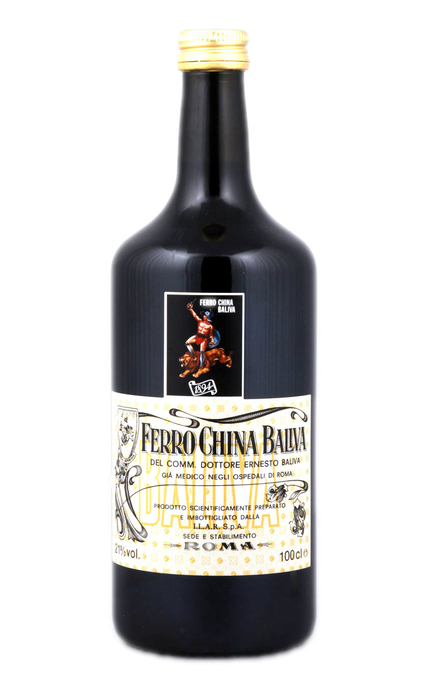
A ferro-china: cinchona bark for quinine bitterness plus iron salts, sweetened into a syrupy tonic that Italian families treated as medicine long before it was a cocktail ingredient.
- ✦Cinchona bark
- ✦Iron citrate
- ✦Bitter orange
- ✦Rhubarb root
- ✦Gentian
- ✦Cinnamon
- ✦Clove
History of the Brand
Ferro-china emerged in the late nineteenth century as a fortifying tonic for anemia and convalescence, sold by pharmacies across Italy.
The Baliva house of Rieti has produced its version since 1881, and it remains one of the few ferro-china bottlings still made continuously by the founding family's business.
Grandparents dosed children with a spoonful in milk; the same bottle now turns up in bars as a bittersweet, iron-tinged modifier.
Tasting Characteristics
Cola, dried orange and medicinal bark
Thick and sweet, with cinchona bitterness and an unmistakable iron tang
Bitter-sweet, drying, with a mineral echo
Flavor meter
How to serve it
- 01A small glass neat after dinner
- 02Splashed into espresso
- 03With soda and lemon as a bitter tonic
Where to Get It
Common in central Italy; specialty abroad
Italian grocers
A pantry staple in Lazio and Abruzzo
Online specialists
Occasional imports; check Italian-focused retailers
Where to buy Ferro China Baliva
We may earn a commission when you buy through these links, at no extra cost to you. See our affiliate disclosure.
Ferro China Baliva FAQ
What is ferro-china?
+
A nineteenth-century Italian tonic combining cinchona bark (quinine) with iron salts, sweetened into a liqueur and originally sold as a restorative.
Does Ferro China Baliva really contain iron?
+
Yes — iron salts are part of the formula, which is where the faint metallic tang in the finish comes from.