Ingredients
Twenty-nine herbs, spices, berries and flowers — among them angelica, star anise, nutmeg, cinnamon, ginger, laurel and Seville orange.
- ✦Angelica
- ✦Star anise
- ✦Nutmeg
- ✦Cinnamon
- ✦Ginger
- ✦Seville orange
- ✦Rowan berry
History of the Brand
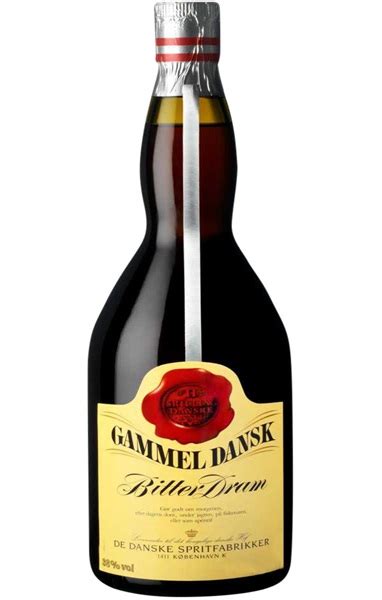
Master distiller Ole Sylvest Jensen developed Gammel Dansk in 1964 after some 200 trial blends.
It was designed for the Danish morning ritual of a bitter dram with breakfast at hunts, weddings and confirmations.
The name means simply 'Old Danish', and the flask shape was made to slip into a coat pocket.
It remains one of Denmark's best-known spirits, drunk cold and neat rather than mixed.
Tasting Characteristics
Angelica, anise, orange peel, warm baking spice.
Less sweet than most amari — bitter root, nutmeg and cinnamon over a dry, clean spirit.
Medium, peppery, drying.
Flavor meter
How to serve it
- 01Ice-cold and neat in a small glass, the Danish way.
- 02As a bitter shot alongside a beer.
- 03In a Nordic twist on a Toronto with rye.
- 04A dash in a hot toddy with lemon and honey.
Where to Get It
Ubiquitous in Denmark; exported to the US and Northern Europe.
Danish supermarkets
A standard shelf item across the country.
Specialty liquor stores
Filed with international bitters and aquavit.
Online retailers
Widely shipped in 700ml and 1L formats.
Where to buy Gammel Dansk
We may earn a commission when you buy through these links, at no extra cost to you. See our affiliate disclosure.
Gammel Dansk FAQ
What is Gammel Dansk?
+
A Danish herbal bitter created in 1964 from 29 botanicals, bottled at 38% ABV.
Why do Danes drink it at breakfast?
+
Tradition — a cold dram of Gammel Dansk accompanies morning gatherings such as hunts, weddings and confirmations.
Is Gammel Dansk sweet?
+
No — it is notably dry and spice-driven compared with Italian amari.