Ingredients
History of the Brand
Riga pharmacist Abraham Kunze is credited with the recipe around 1752, sold as a cure-all balsam.
Legend has it that Catherine the Great fell ill in Riga and recovered after a dose, which secured the balsam's reputation across the Russian Empire.
The formula was lost during the Second World War and reconstructed in 1954 by a team of masters working from surviving records.
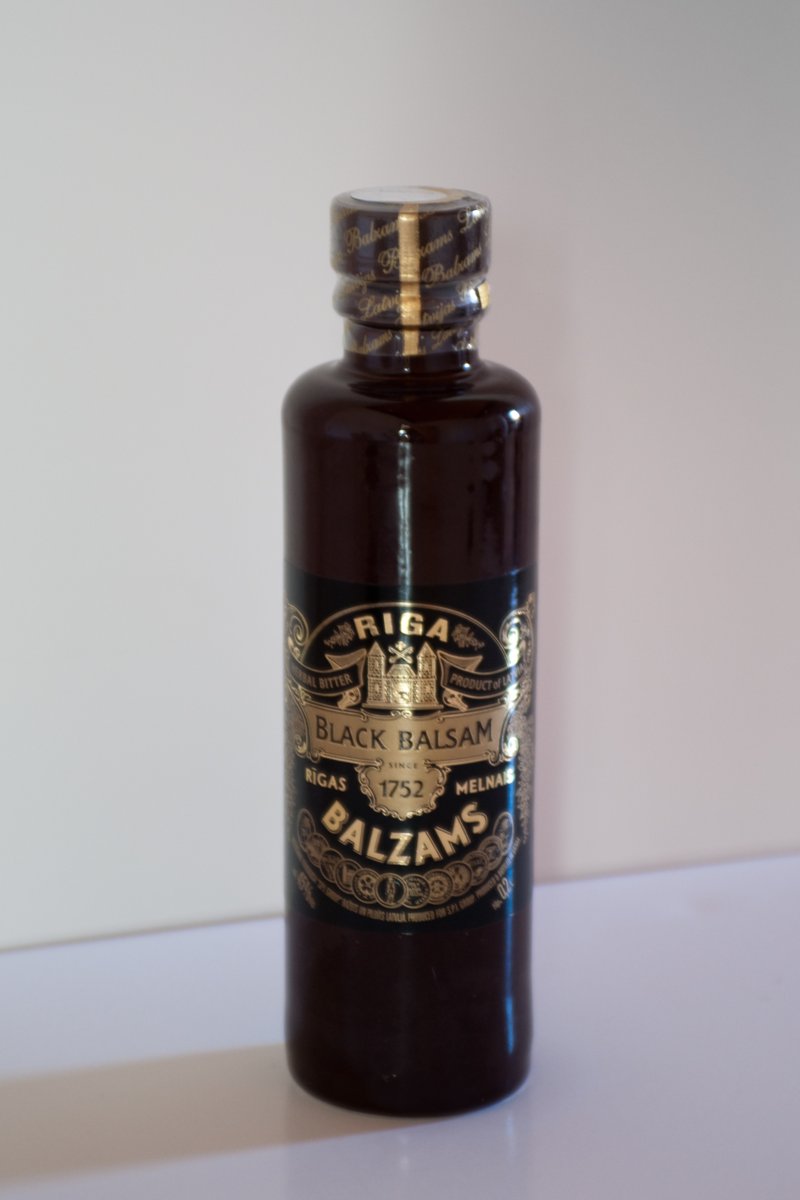
Modern line extensions include a blackcurrant version and Element, but the classic still ships in its opaque ceramic bottle, which shields the liquid from light.
Tasting Characteristics
Liquorice, molasses, birch, dark berry.
Syrupy and bittersweet, with valerian earthiness, ginger heat and a burnt-caramel weight.
Very long, warming, medicinal.
Flavor meter
How to serve it
- 01A spoonful stirred into hot black tea or coffee, the Latvian way.
- 02Neat and cold as a digestive shot.
- 03Long with blackcurrant juice and soda.
- 04In a dark, bitter twist on a Black Manhattan.
Where to Get It
Exported widely; a staple of Baltic duty free and Latvian shops.
Specialty liquor stores
Usually with the international bitters.
Online retailers
Classic, Currant and Element versions all circulate.
Riga shops
Every souvenir shop in the old town stocks it.
Where to buy Riga Black Balsam
We may earn a commission when you buy through these links, at no extra cost to you. See our affiliate disclosure.
Riga Black Balsam FAQ
What is Riga Black Balsam made from?
+
Twenty-four botanicals including birch buds, linden blossom, valerian, ginger and Peruvian balsam oil, at 45% ABV.
How do Latvians drink Black Balsam?
+
Most often stirred into hot tea or coffee, or drunk cold as a digestive shot.
Why is the bottle ceramic?
+
The opaque clay flask keeps light out and helps preserve the balsam's delicate botanical oils.