
Ingredients
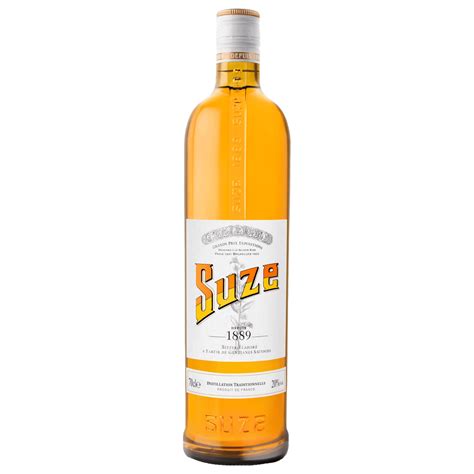
Built almost entirely on Gentiana lutea — yellow gentian roots hand-dug in the Auvergne and Jura mountains, macerated for months, then blended with a small supporting cast of aromatic plants and sugar.
- ✦Yellow gentian root (Gentiana lutea)
- ✦Citrus peel
- ✦Aromatic plants
- ✦Sugar
History of the Brand
Fernand Moureaux commercialised Suze in 1889, and it was a fixture of French cafés by the early twentieth century.
Picasso pasted a Suze label into his 1912 collage 'Verre et bouteille de Suze', permanently fixing the bottle in art history.
Yellow gentian takes years to mature in the ground and is still dug by hand with a long two-pronged fork called a devil's fork.
The modern cocktail revival made Suze essential: it is the backbone of the White Negroni, invented in Bordeaux in 2001.
Tasting Characteristics
Wet earth, gentian root, orange blossom, candied lemon.
Sweet at the front, then a big rooty, almost vegetal bitterness with a floral lift.
Long, dry, mineral.
Flavor meter
How to serve it
- 01On the rocks with a splash of soda and a lemon twist.
- 02In a White Negroni with gin and Lillet Blanc.
- 03Long with tonic as a summer aperitif.
- 04Split with Campari for a deeper, earthier Negroni.
Where to Get It
Widely distributed; a bar staple in France and increasingly everywhere else.
Liquor stores
Usually shelved with aperitifs and vermouths.
Online retailers
Easy to find; check ABV, which varies by market.
French supermarkets
Stocked everywhere, at low prices.
Where to buy Suze
We may earn a commission when you buy through these links, at no extra cost to you. See our affiliate disclosure.
Suze FAQ
What is Suze made from?
+
Chiefly yellow gentian root, Gentiana lutea, hand-dug in the Auvergne and Jura and macerated for months.
What cocktail is Suze best known for?
+
The White Negroni — gin, Suze and Lillet Blanc — created in Bordeaux in 2001.
Is Suze an amaro?
+
It is the French cousin: a gentian aperitif rather than an Italian amaro, but it plays the same role behind the bar.