Amaro is not distilled the way gin is. In almost every case a producer starts with a finished neutral spirit, soaks bitter and aromatic plant material in it until the liquid tastes of those plants, then blends, sweetens, dilutes to strength, and lets the result sit until it stops tasting like its parts. There is no single legal recipe, no minimum botanical count, no protected method. That is why the category runs from an 11% orange aperitivo to a 40% mountain bitter and still uses one word.
Four decisions do most of the work:
- What the bitterness comes from
- How the flavor is extracted
- How much sugar goes back in
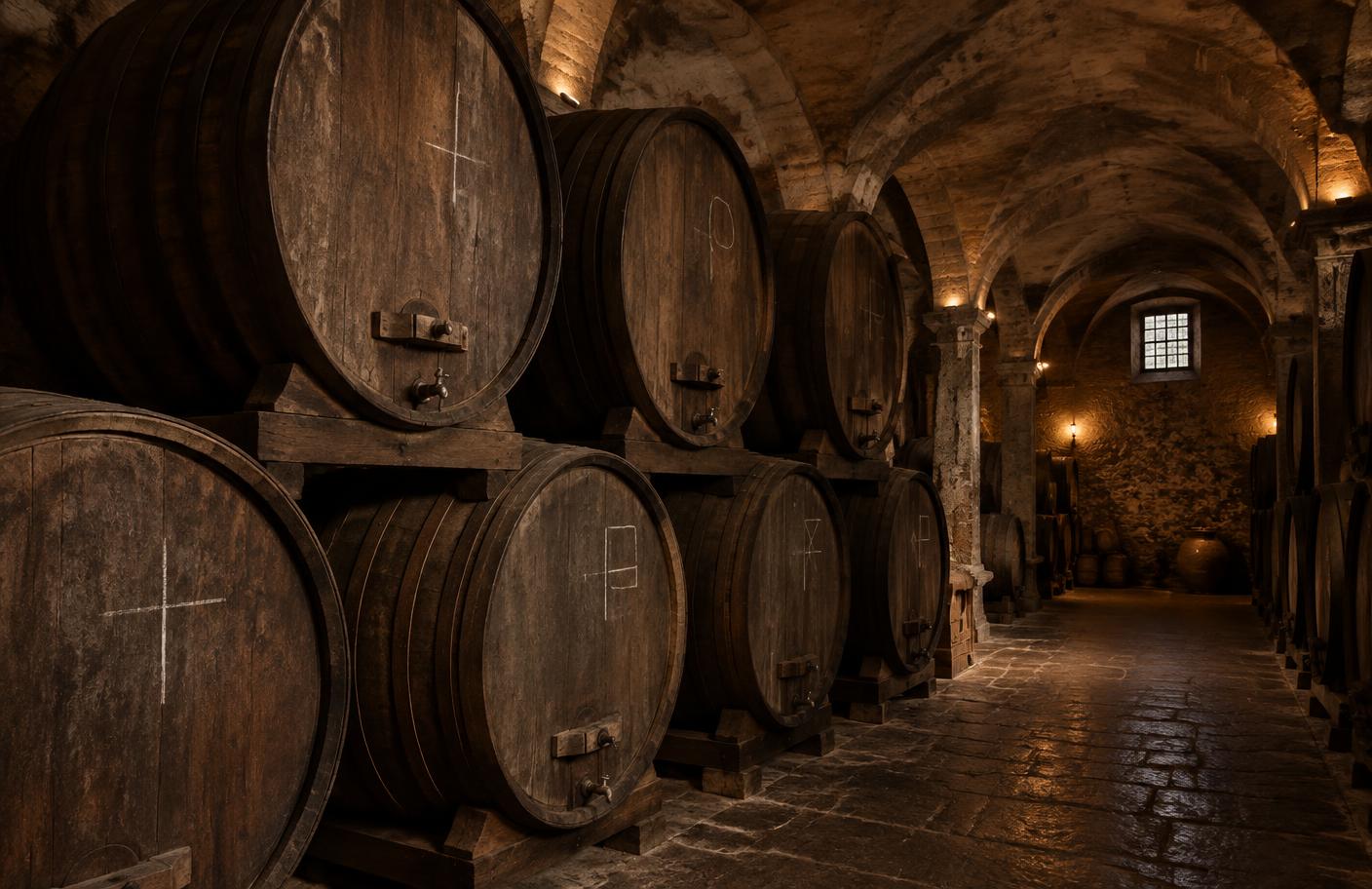
- How long the finished liqueur rests, and in what
1. The base spirit
Most Italian amari begin with rectified neutral spirit — usually grain or sugar beet, occasionally grape. The base is chosen to disappear. A producer who wants the botanicals to be the whole story picks the cleanest spirit available, and the label rarely mentions it.
The exceptions are worth knowing, because you can taste them:
- Grape distillate. Nonino Quintessentia is built around the family's ÙE, a whole-grape acquavite aged in Limousin, Nevers and ex-Sherry casks, which then ennobles the herbal quintessence. The family's 1933 amaro used grappa; Quintessentia, launched in 1992, replaced it with aged ÙE — so "grappa-based" is common shorthand and slightly wrong. The casks age the base distillate, not the finished amaro.
- Wine base. Barolo Chinato and the chinati generally are Barolo, sugar and a spirit infusion of cinchona and other botanicals. They sit beside amaro on the shelf and drink like an aromatized fortified wine — but legally they are a different product.
- Brandy or aged spirit. A handful of small producers use an aged base for weight.
Base strength matters as much as base type. Bitter compounds and essential oils dissolve more readily in high-proof alcohol, so a producer chasing hard, rooty bitterness will macerate high and dilute later; one chasing floral and citrus lift works gentler.
2. The botanicals
A working amaro needs three jobs filled, and recipes differ mostly in who fills them.
The bitter agent — the spine, almost always a root or a bark:
- Gentian (genziana) — clean, earthy, mineral bitterness; the alpine default
- Wormwood (assenzio) — sharper, drier, slightly medicinal
- Rhubarb root (rabarbaro) — smoky, woody, faintly sweet-sour
- Cinchona (china) — quinine bitterness, tight and drying
- Artichoke leaf (carciofo) — vegetal, green bitterness, as in Cynar
- Bitter orange peel — the most common bitterness that also reads as fruit
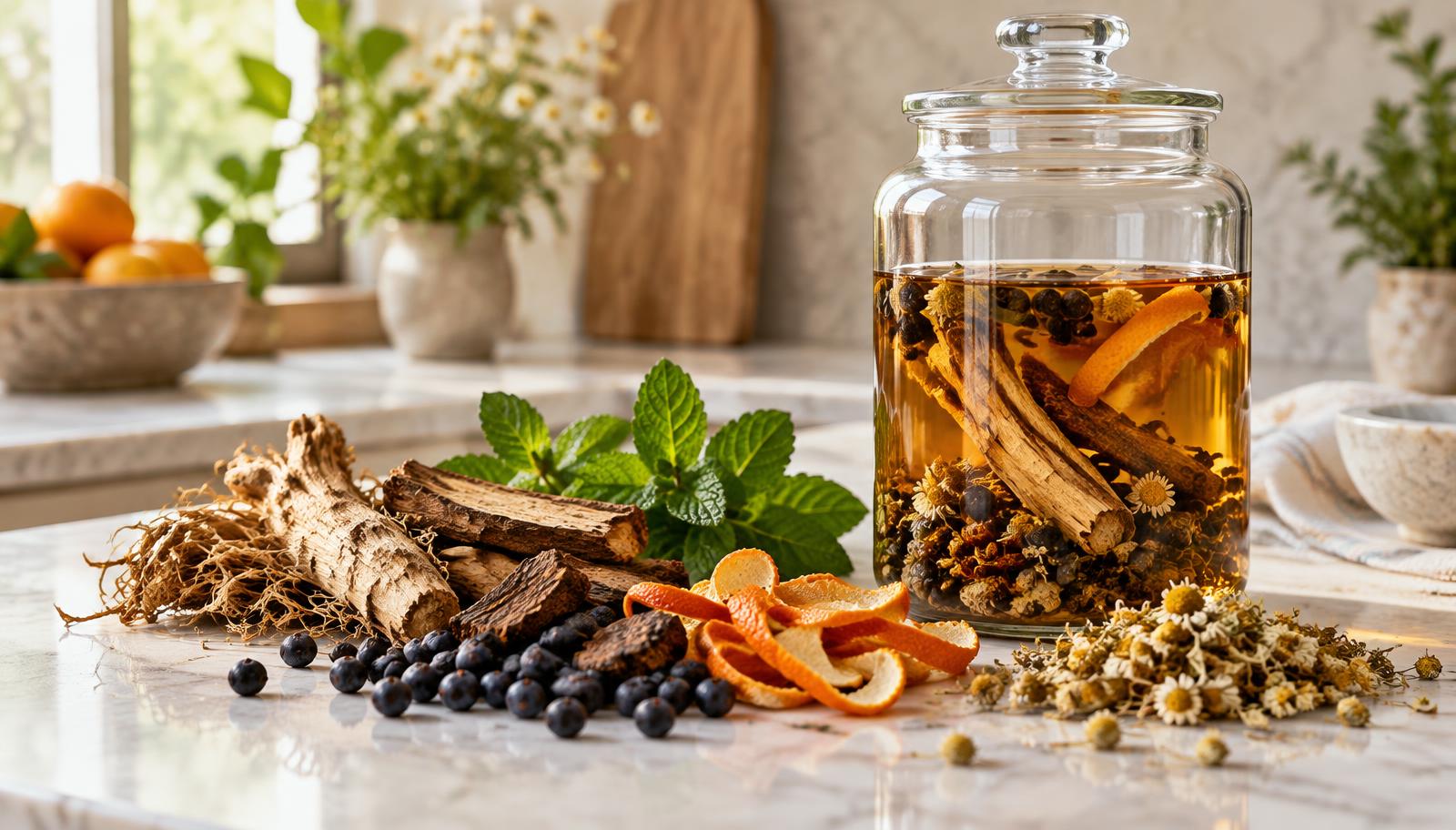
The aromatics — mint, sage, rosemary, thyme, chamomile, saffron, myrrh, angelica, juniper, aloe, pine and fir shoots, and mountain herbs collected at altitude. This is the part people describe when they say an amaro smells "alpine" or "medicinal."
The spice and sweet notes — cinnamon, clove, cardamom, star anise, licorice root, vanilla, cocoa nib, coffee. Licorice does double duty: it reads sweet without adding sugar, and it lengthens a finish.
A number like "27 botanicals" or "26 herbs, roots, fruits and flowers" is heritage copy carried down from a 19th-century recipe. Most producers disclose part of the list and hold the rest as family property. Braulio names four — wormwood, gentian, musk yarrow, juniper. Fernet-Branca puts its total at twenty-seven and discusses a number of them publicly, including mint, saffron, myrrh, rhubarb, gentian and aloe, without publishing the formula. Everything else you read in a botanical list, here included, is a producer statement or an educated inference — and we label it that way.
3. Extraction: maceration, percolation, decoction, distillation
Maceration is the standard. Dried plant material steeps in spirit, cold or barely warm, for days to weeks. It is slow and unforgiving in the right way — extract too long and tannin and harsh green notes come along with the flavor. Delicate material (flowers, citrus peel, mint) gets a short soak; hard material (roots, barks) gets a long one. Which is why most houses macerate in separate batches rather than throwing everything into one tank.
Percolation circulates spirit through a bed of botanicals, like coffee through grounds — faster, more controlled, gentler on delicate aromatics.
Infusion and decoction use water and heat. Simmering roots and barks pulls out compounds alcohol alone leaves behind and gives the dense, almost broth-like depth of the fernet style. Fernet-Branca runs both paths — a hot, settled extraction for material such as aloe and chamomile, cold extraction for others — before blending and oak.
Distillation appears less often than people assume. Some producers distill one or two individual botanical extracts and blend the distillate back in for lift and clarity, the way a perfumer adds a top note; Montenegro is the usual example. But an amaro is fundamentally an infused product, not a distilled one. When a bottle tastes bright and high-toned rather than rooty, a distilled fraction is often the reason.
Most serious houses use several of these on the same product: a long cold maceration for the roots, a short one for the citrus, a decoction for the barks — and then the blender's actual job, deciding how much of each goes into the final cut.
4. Sugar, color, and strength
Amaro is a liqueur, and a liqueur is a sweetened spirit. Sugar is not a compromise; it is what makes bitterness legible. Without it, a gentian extract is just unpleasant.
EU liqueur rules generally require at least 100 g/L of sugar and 15% ABV, with gentian liqueurs allowed down to 80 g/L. Producers rarely publish their own numbers, but commonly cited figures put the working range at roughly 80 to 260+ g/L: Fernet-Branca sits near the floor around 80, while Campari, Aperol and the darker Sicilian styles are frequently cited well above 150, and Cynar higher still. Treat any specific number for a specific bottle as reported rather than official.
Even a bottle that tastes bone-dry has sugar in it. "No sugar" claims about fernet should be read as little sugar to hide behind — a genuinely unsweetened amaro is commercially rare, and it would taste punishing.
Caramel does two things: it darkens the liquid and contributes the toffee-cola undertow that defines the dark Sicilian and Emilian styles. Averna's color and much of its character come from caramel and sugar, not from years in wood. Some producers make a point of avoiding artificial color — Amaro dell'Etna lists alcohol, sugar, herbal infusions and natural flavors, with no artificial color or preservatives.
The finished liqueur is then cut with water to bottling strength. Where that lands is a style convention rather than a rule: roughly 11–16% at the light aperitivo end, 16–30% for most digestivi, 30–40% for the fernet and alpine end.