
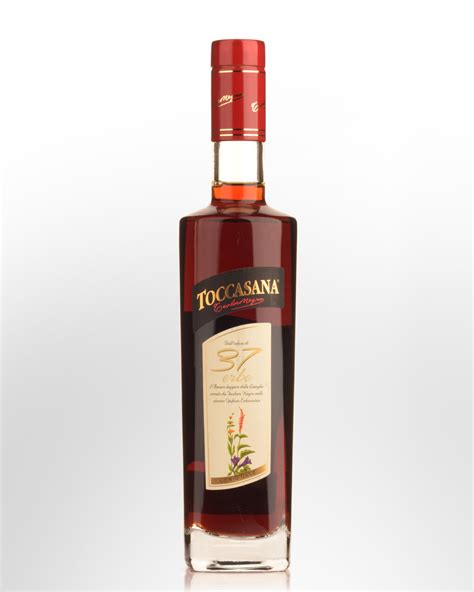
Ingredients
A dense infusion of alpine herbs, roots and barks from the Asiago plateau, sweetened lightly and left frankly medicinal.
- ✦Gentian root
- ✦Rhubarb root
- ✦Wormwood
- ✦Mint
- ✦Angelica
- ✦Cinchona bark
- ✦Licorice
- ✦Alpine mountain herbs
History of the Brand
The Rossi family have distilled on the Asiago plateau since 1868, and their grappa and herbal liqueurs became household staples across the Veneto.
Toccasana — roughly 'touches you well' — was sold in the early twentieth century as a household restorative for digestion, chills and general malaise.
The name and the label survived largely unchanged, giving the bottle a chemist's-shelf look that has aged into charm.
Bartenders rediscovered it during the amaro revival for its menthol lift and unapologetic bitterness, useful where Fernet would be too heavy-handed.
Tasting Characteristics
Fresh mint, gentian earth and dried licorice root.
Cooling and herbal up front, with rhubarb and wormwood bitterness building behind. Sweetness is present but restrained.
Long, minty and drying.
Flavor meter
How to serve it
- 01Neat at room temperature after a heavy meal.
- 02Chilled from the freezer as a bracing shot.
- 03Stirred into espresso alpine-style.
- 04As the Fernet slot in a Hanky Panky riff.
Where to Get It
Common across northern Italy; imported in small volumes elsewhere.
Italian grocers and enoteche
A standard shelf bottle in the Veneto.
Specialist importers
Search 'Rossi d'Asiago Toccasana'.
Online spirits retailers
Usually $30–$40.
Where to buy Amaro Toccasana
We may earn a commission when you buy through these links, at no extra cost to you. See our affiliate disclosure.
Amaro Toccasana FAQ
What does Amaro Toccasana taste like?
+
Cool mint and licorice over gentian and rhubarb bitterness, with only light sweetness.
Is Toccasana similar to Fernet?
+
It shares the menthol-and-bitter-root axis but is softer, sweeter and less saline than Fernet-Branca.