Same parent company, same aperitivo hour, very different bottles. Bitterness, ABV, botanicals, color and — most usefully — which cocktails each one was built for.
August 31, 2026 · 9 min read · Robert Parker Cross
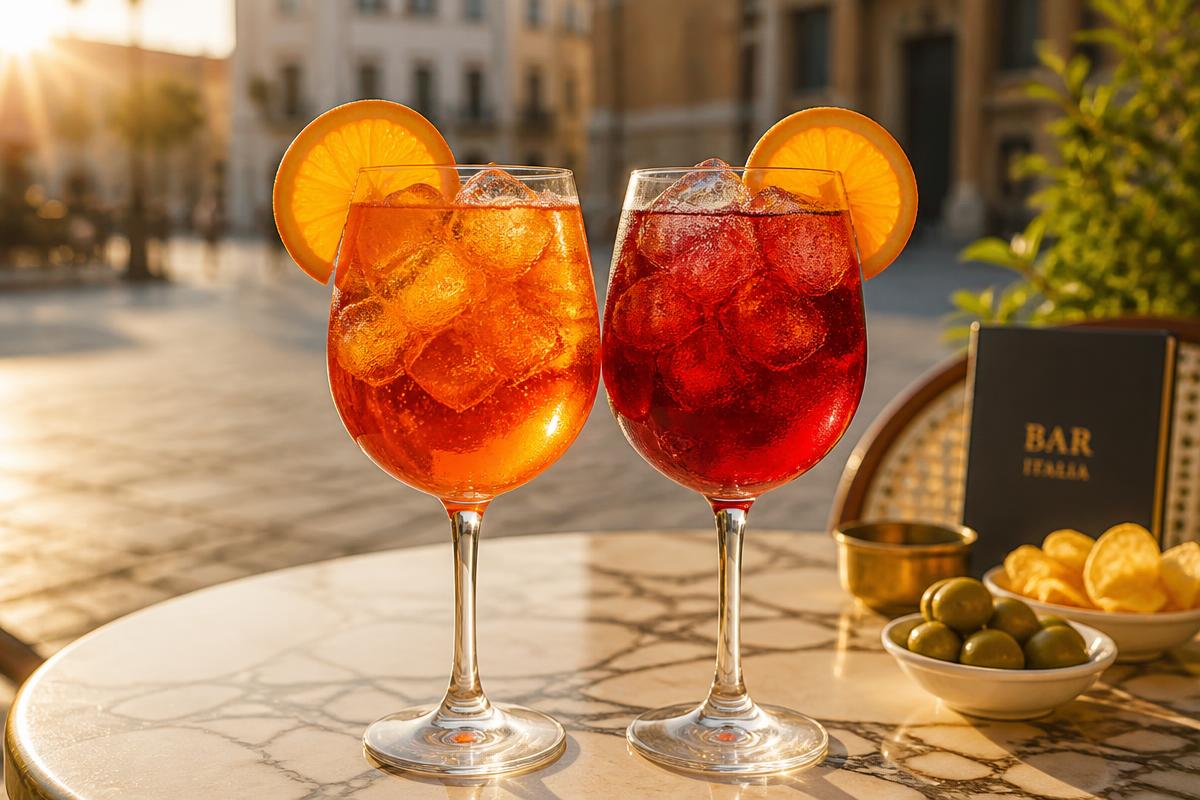
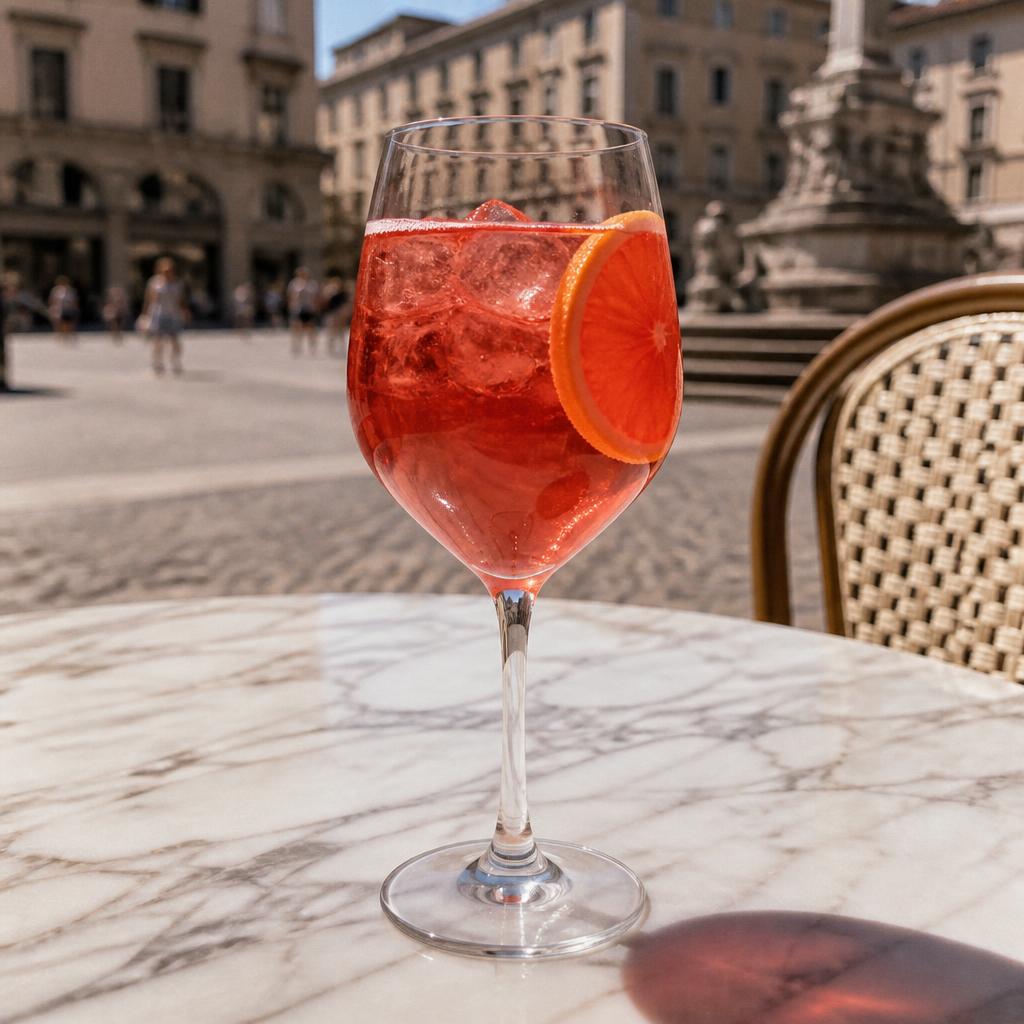
Stand in an Italian piazza at six in the evening and you can read the whole aperitivo hour by color. Orange glasses on one table, deep red on the next, ice to the rim on both, a bowl of chips and olives between them. The orange is usually Aperol. The red is usually Campari.
Both belong to Campari Group. Both are Italian bitter aperitivi built to open an appetite rather than close a meal. And people swap them in recipes constantly, then wonder why the drink came out thin or came out savage. They are not interchangeable — the gap between them is roughly the gap between a session beer and a barrel-proof whiskey.
Here is the honest comparison: what is actually in each bottle, how bitter and how strong they really are, and which drinks each one was designed to carry. If you want the wider category first, start with what amaro is and the 23 types of Italian amaro.
Campari is roughly 24–28% ABV depending on the market, deep ruby red, and firmly bitter — orange peel, rhubarb root, bark and a long dry finish that lingers after the sip is gone.
Aperol is 11% ABV, bright orange, and noticeably sweeter — orange zest, a little vanilla, rhubarb and gentian underneath, with bitterness that shows up late and politely.
In practical terms: Campari is a structural ingredient. Aperol is a refreshment ingredient. Campari can hold its own against gin, rye and bourbon in a stirred drink. Aperol is happiest with bubbles, citrus juice and long dilution.
One rule of thumb worth memorizing: you can almost always pour Aperol into a Campari drink and get something softer and sweeter, but pouring Campari into an Aperol drink at the same ratio will flatten everything else in the glass.
Campari is a structural ingredient. Aperol is a refreshment ingredient.
Campari was created in Milan in 1860 by Gaspare Campari, and the recipe has stayed under lock and key ever since. What is public is the shape of the flavor: intense bitter orange, rhubarb, and a woody, root-cellar bitterness from barks and aromatic herbs, all carried on a neutral spirit base with sugar to pull it back into drinkability.
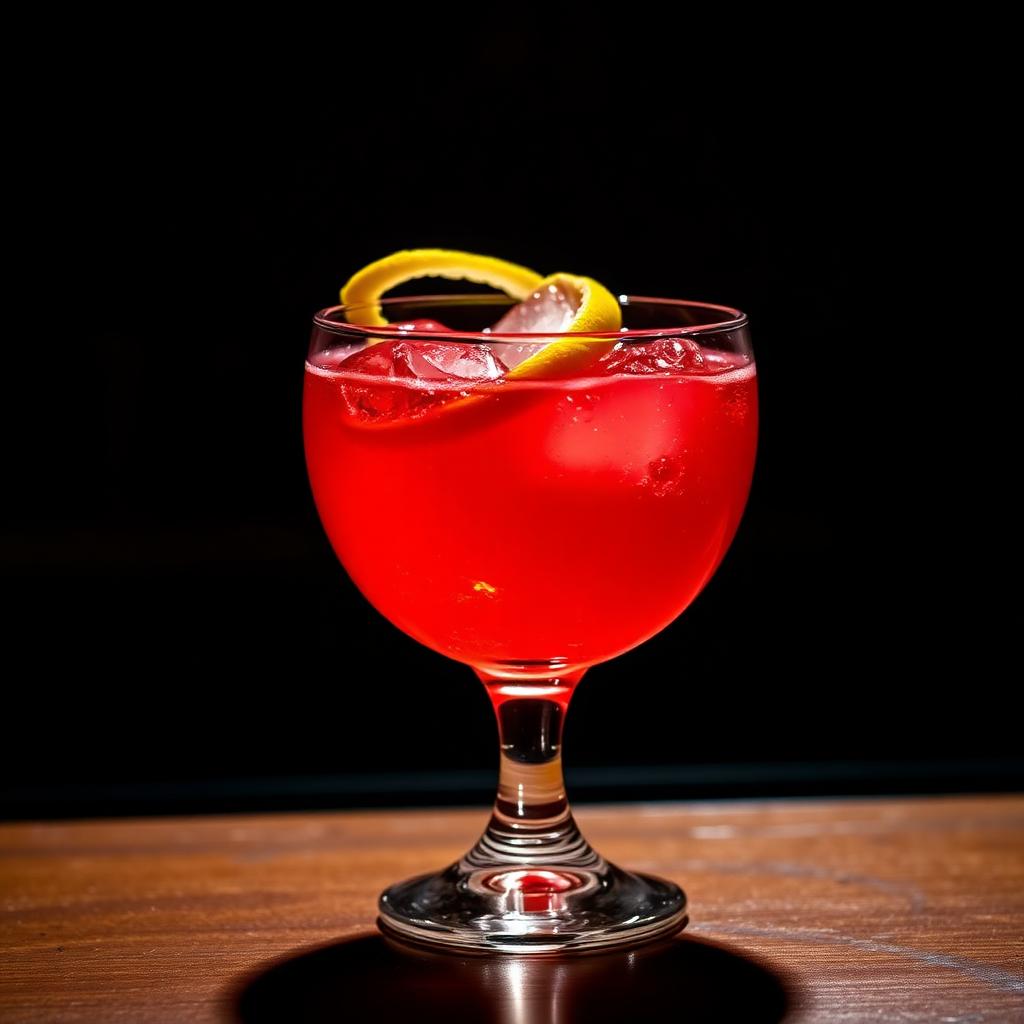
That red used to come from carmine, a dye made from cochineal insects. Campari stopped using it in 2006, so the modern bottle is vegan-friendly and the color now comes from plant and synthetic sources. The hue matters more than it sounds: it is why a Negroni looks like a Negroni and why the drink photographs the way it does.
Campari sits at the head of a whole family of red bitter aperitivi — Select Aperitivo from Venice, Contratto Bitter from Piedmont, Cappelletti from Trentino, made on a wine base. If you like Campari but want a different accent, those are the bottles to explore next; the full profile lives in our Campari encyclopedia entry.
Bitterness aside, the thing bartenders actually value in Campari is length. It leaves a dry, faintly medicinal tail that keeps a sweet drink from turning into candy.
Aperol launched in Padua in 1919, from the Barbieri brothers, and its botanical list is less secretive than Campari's: bitter and sweet oranges, rhubarb, gentian root and cinchona bark — the same bark that makes tonic water taste like tonic water.
The result is citrus-forward rather than root-forward. You get orange zest and a soft vanilla-adjacent sweetness up front, a gentle herbal edge in the middle, and only a whisper of bitterness at the end. At 11% ABV it is barely stronger than a glass of white wine, which is exactly why Italians drink it for two hours on a Sunday afternoon.
It is the easiest possible entry point to Italian bitters. If someone at your table insists they hate bitter drinks, hand them Aperol and citrus and watch the position soften. Full tasting notes are in the Aperol encyclopedia entry.
Campari earns its keep in stirred, spirit-driven drinks where something has to push back against the base spirit. Gin, rye, bourbon, mezcal, aged rum — all of them have enough shoulders to trade blows with it.
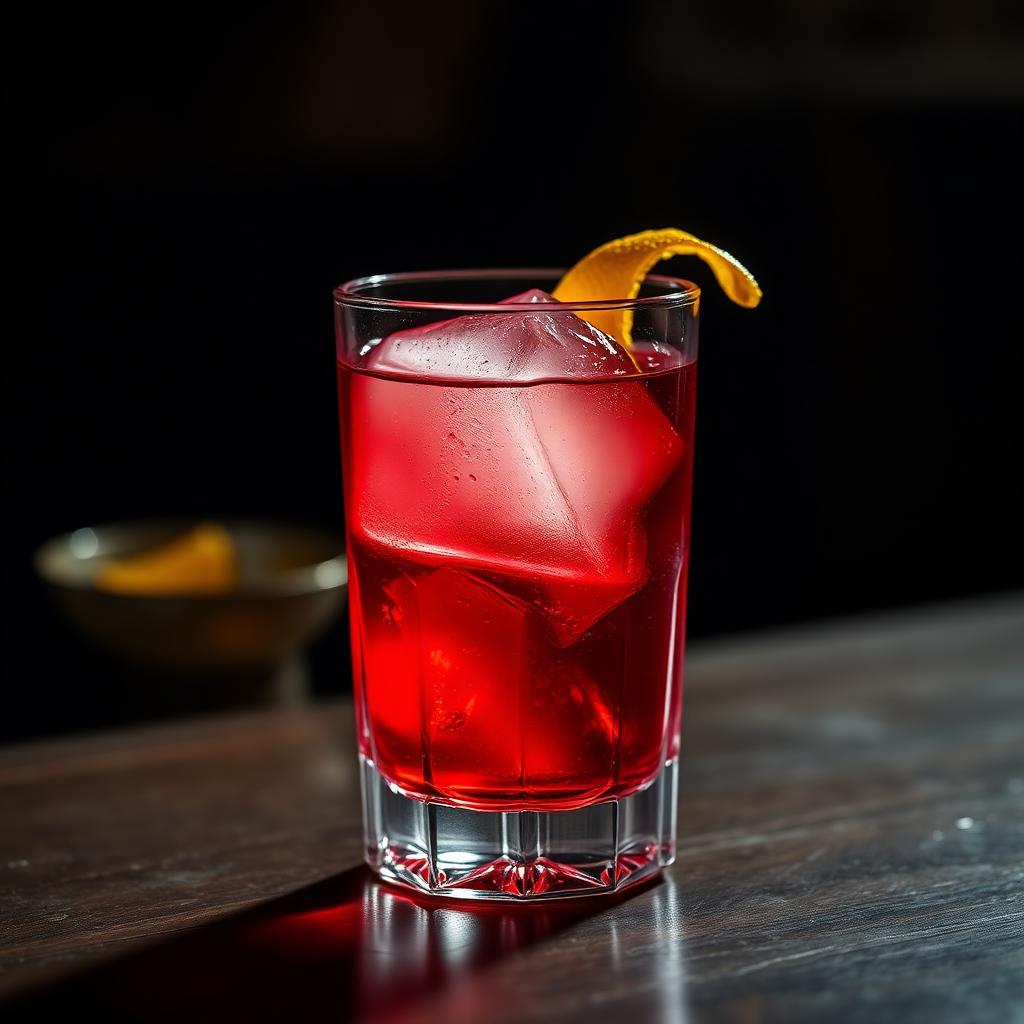
The classics write themselves. Equal parts gin, sweet vermouth and Campari is the Negroni. Swap gin for bourbon or rye and you have the Boulevardier family; swap it for prosecco and you have the Negroni Sbagliato. Drop the gin entirely, add soda, and it is an Americano — lighter, longer, and the drink most Italians actually order.
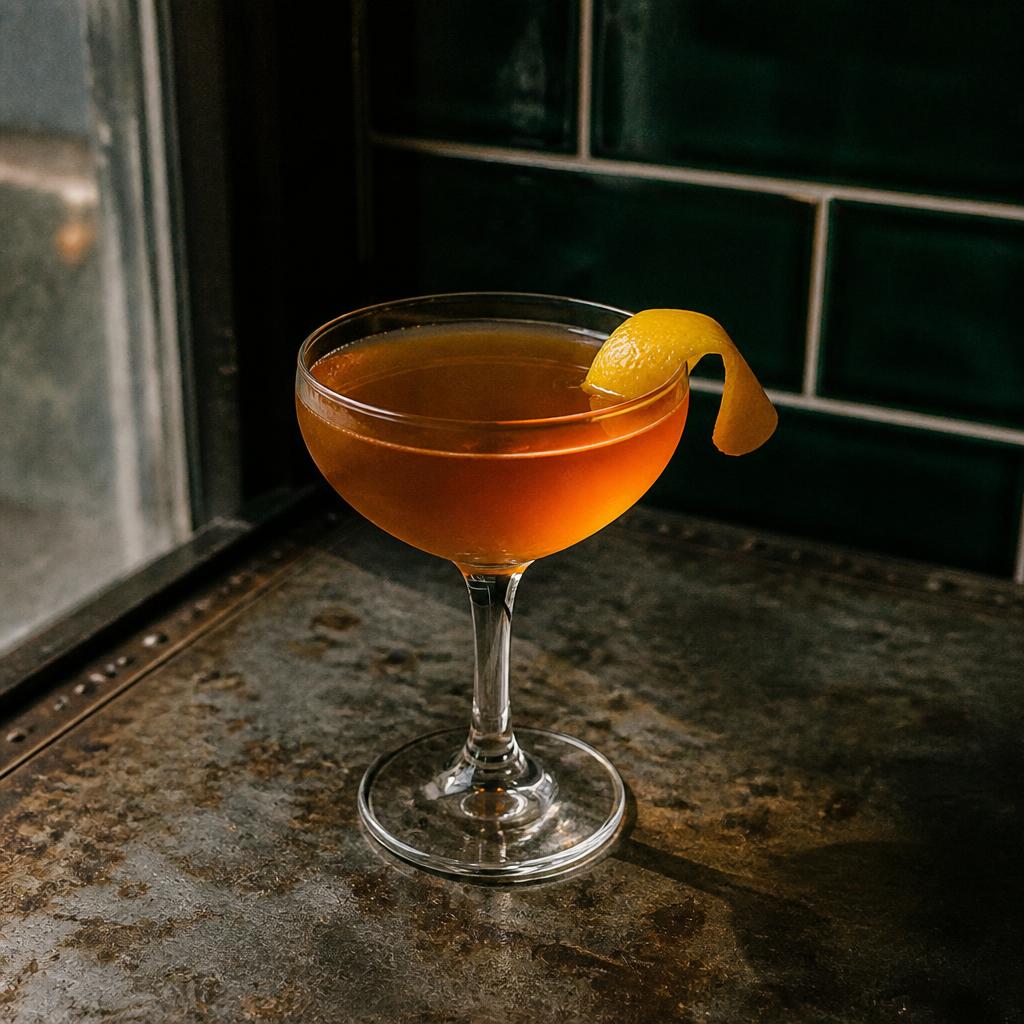
For a leaner, drier version, the Old Pal trades sweet vermouth for dry and rye for gin. For something smokier, the Mezcal Negroni is the easiest upgrade in the whole category. For a lower-proof afternoon pour, the Bicicletta is just Campari, white wine and soda.
Campari's one liability is volume. It can bully delicate ingredients — cucumber, elderflower, light florals, delicate white spirits — into invisibility. When you are working with something fragile, cut the Campari to a quarter or half ounce and use it as seasoning rather than a component.
It also plays remarkably well with savory and acidic partners: tomato water, balsamic, salt, black pepper, and grapefruit. That bitterness reads as structure the same way tannin does in wine.
The Aperol Spritz is three ingredients — three parts prosecco, two parts Aperol, one splash of soda over a mountain of ice with an orange slice — and it is famous for good reason. Bubbles lift the citrus aromatics, prosecco's sweetness meets the mild bitterness halfway, and the low ABV means a second one is not a decision.
Beyond the spritz, Aperol loves juice. Grapefruit is the natural partner; watermelon, peach and passion fruit all work in warm weather. The Paper Plane is the best argument for Aperol in a serious cocktail: equal parts bourbon, Aperol, Amaro Nonino and lemon, where Aperol supplies brightness while the amaro handles depth.
For a long, sunny pour built on the same logic as a Garibaldi — Campari and fluffy orange juice — try Aperol with grapefruit juice and soda instead. Same shape, half the bite.
Where Aperol falls down is in stirred, boozy drinks. Swap it into a Negroni at full measure and you get something pale, sweet and structureless. If you want an Aperol Negroni that works, add a bar spoon of Campari or a dash of bitter orange to restore the backbone.
Sometimes, with adjustments. Aperol in place of Campari: use the same volume, then cut the sweet vermouth or simple syrup slightly and add a dash of orange bitters, because you have lost both bitterness and proof.
Campari in place of Aperol: use about two-thirds the volume and expect a much drier, redder drink. In a spritz, three parts prosecco to one and a half parts Campari lands closer to the original balance than a straight one-for-one swap.
If neither bottle is on your shelf, our amaro substitution guide maps the near neighbors — Select, Contratto, Cappelletti, Luxardo Bitter — and what each swap does to a drink.
And if you are still deciding which style suits your palate, the Find Your Amaro quiz will sort you into a flavor family in about a minute.
Spritzes belong in a large stemmed wine goblet, filled with ice to the very top. Under-icing is the single most common home mistake: less ice means faster melt, warmer drink and a flabby middle.
Negronis, Boulevardiers and Old Pals go in a rocks glass over one big cube, or up in a coupe if you want them colder and more elegant. Americanos and Bicicletta go in a highball.
Garnish with a real orange slice or an expressed orange peel, not a dried wheel. Both bottles are orange-driven, and the oil from a fresh peel does more work than anything else you can add at the last second. Full details are in the amaro glassware guide.
Yes, substantially. Campari is around 24–28% ABV depending on the market, while Aperol is 11% ABV. Campari is also considerably more bitter and less sweet.
You can, but it is a different drink — softer, sweeter, paler and lower in proof. To keep some structure, reduce the sweet vermouth slightly and add a dash of orange bitters, or top up with a bar spoon of Campari.
Both are owned by Campari Group. Campari dates to Milan in 1860; Aperol was created in Padua in 1919 and joined the group in 2003.
Technically they are aperitivi rather than amari — bitter liqueurs made to be drunk before a meal rather than after. They sit in the same bitter-liqueur world, but classic amari like Averna or Fernet-Branca are richer, usually higher in ABV and served as digestivi.
Aperol, if you mostly want spritzes and long, refreshing drinks. Campari, if you want to make Negronis, Boulevardiers and Americanos. Campari is also the more versatile bottle overall because you can always sweeten it down.
The color once came from carmine, a dye derived from cochineal insects. Campari stopped using carmine in 2006, so today's bottle gets its red from other colorants and is suitable for vegans.
Enjoyed this? Send it around.
Post to X