ABV, 'fernet,' 'elisir,' 'rabarbaro,' riserva claims and that tiny importer panel — what every word on an Italian amaro bottle is actually telling you, and what it isn't.
August 9, 2026 · 8 min read · Amaro Aficionado
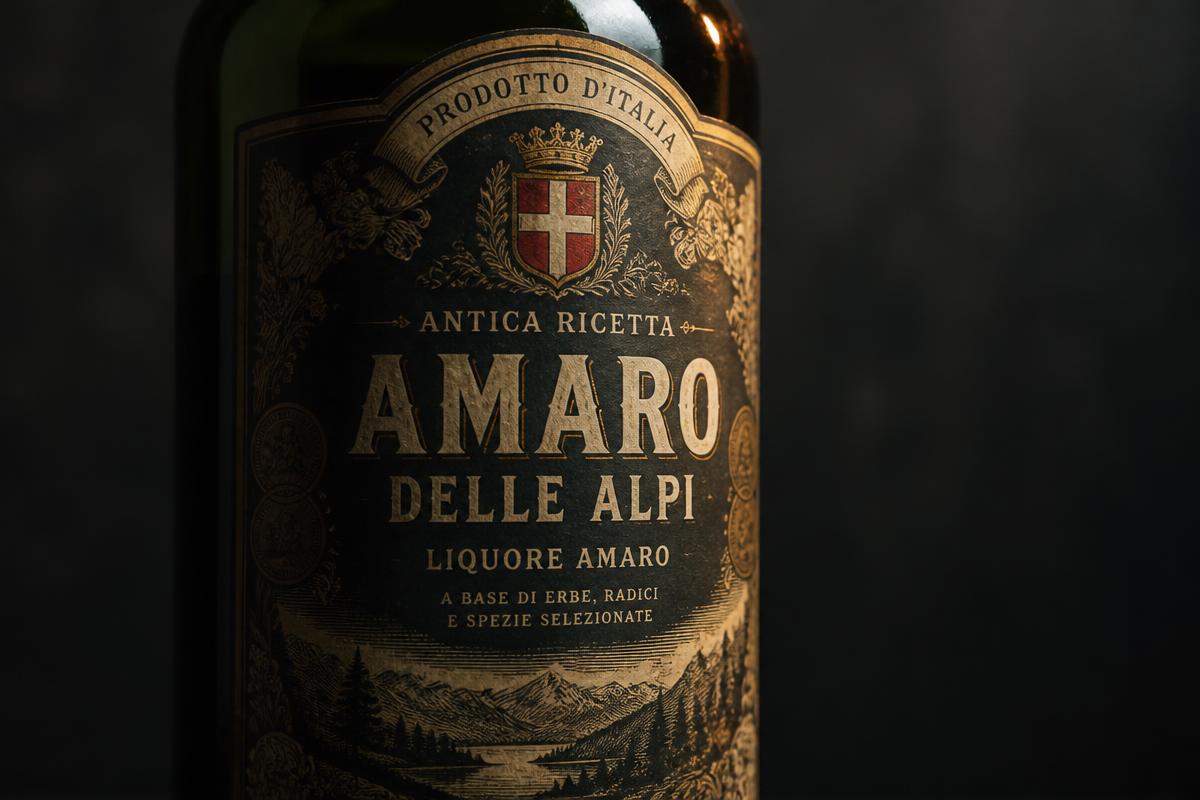
Standing in front of a shelf of Italian amaro is a vocabulary test nobody studied for. Amaro, amaro alpino, fernet, elisir, rabarbaro, carciofo, china, bitter, aperitivo — plus a number that runs from 11% up past 40% and changes everything about how the bottle should be poured.
The good news is that a handful of fields on the label are reliably factual: ABV, volume, the producer and bottler address, and the category and modifier words. The recipe stays secret, sugar and caramel are rarely spelled out, and words like riserva are marketing — but those four honest fields are enough to predict, with real accuracy, what is in the glass before you order it.
Here is the whole decoder, front label to back panel. If you want this same information bottle by bottle, our Encyclopedia of Amaro breaks out region, producer, ABV, botanicals, tasting notes and serving suggestions for every entry on the site — and it's searchable and filterable by region, producer and ABV range.
The single most useful word on the label is the one describing the category. Italian producers use it as shorthand for a flavor style, and it is remarkably consistent across brands.
Amaro on its own means a bittersweet herbal liqueur — the broad family. Fernet signals the most aggressive corner of it: high menthol, saffron, myrrh, bracing bitterness, and dry for an amaro — Fernet-Branca still carries sugar, often cited around 80 g/L, it just has far less than Averna or Montenegro. Elisir or Elixir implies an old apothecary or monastic recipe, typically sweeter and more medicinal in character. Bitter or Aperitivo points the other way entirely: lower ABV, citrus-forward, built for spritzes rather than after dinner.
You will also see Liquore Amaro or Amaro d'Erbe — both simply mean herbal bitter liqueur. They are generic product names, not a guarantee about how the liquid was built; a single-botanical bottle can legally call itself amaro too.
Treat all of this as a rule of thumb rather than a spec. House style still dominates: two bottles labelled alpino can taste nothing alike.
If you want the long version of how these families diverged, we cover it in Amaro vs. Digestivo vs. Aperitivo and in Types of Amaro.
Fernet is a promise, not a brand. So is elisir.
The second word narrows the flavor down to a signature botanical, and this is where labels get genuinely predictive.
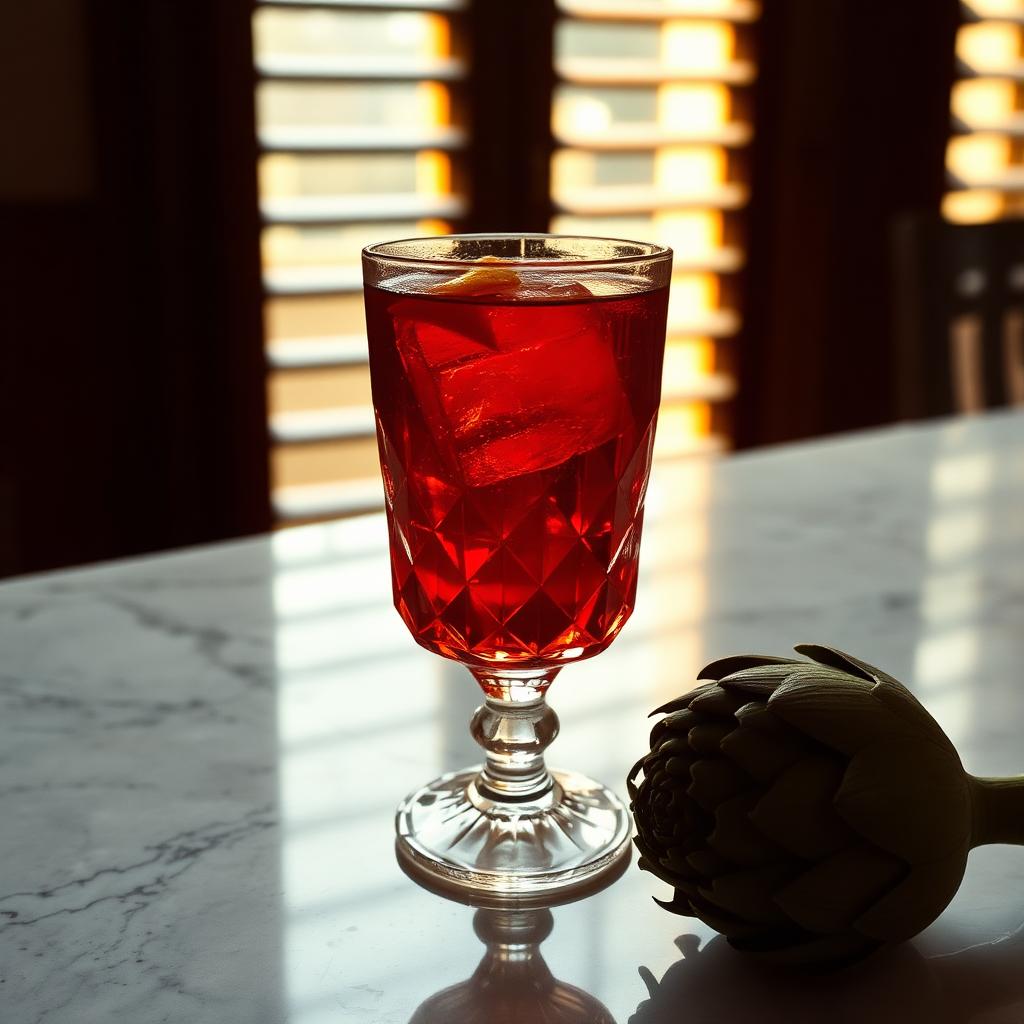
Alpino means mountain herbs — gentian, wormwood, pine, juniper — cold, resinous and dry, as in Braulio. Rabarbaro means Chinese rhubarb root (Rheum palmatum), which tends to read smoky, tarry and cola-like; some producers describe drying or smoking the root, but that is a house choice, not a rule of the category. Carciofo means artichoke, the defining note of Cynar — vegetal, savory, salt-friendly.
China (pronounced KEE-nah) means cinchona bark, the quinine source, giving a clean tonic-like bitterness. Menta means mint, as in a mentholated Fernet variant. Carciofo, china, rabarbaro — three words, three completely different drinks. Rarer modifiers turn up too: tartufo (truffle) marks a handful of Umbrian specialty bottles rather than a back-bar family of its own.
The bottles in a good back bar usually cover four or five of these families at once, which is why a row of amari can look identical and taste nothing alike.
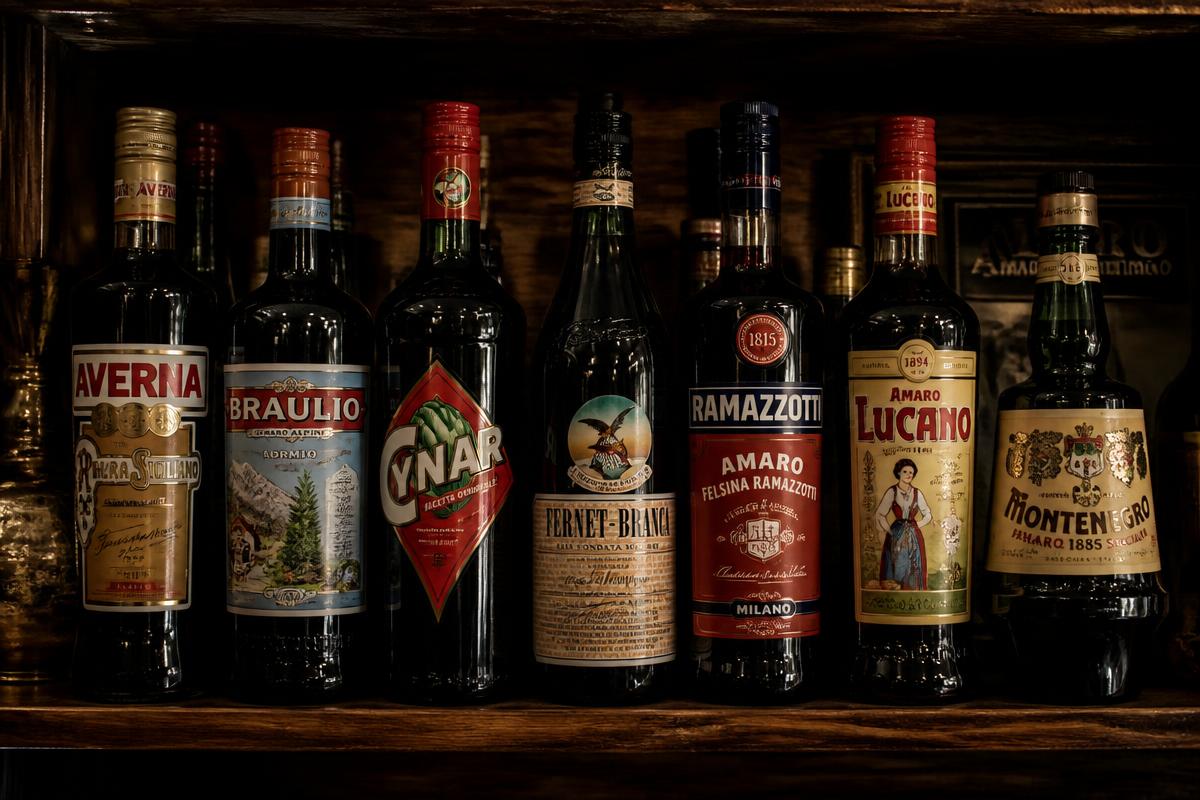
Alcohol by volume is printed as % vol. on every Italian bottle, and it is the fastest way to guess how a bottle wants to be drunk.
Roughly 11–21% is aperitivo territory, with Aperol at the floor at 11% in most markets and Campari higher up — Campari is bottled anywhere from about 20.5% to 28.5% depending on the country, commonly 24% or 25% at U.S. retail. These are spritz and low-ABV highball bottles. 21–30% is the classic after-dinner range: Averna at 29%, Montenegro at 23%. Sweet enough to sip neat, soft enough over ice.
30–40% is the assertive tier — Fernet-Branca at 39%, Nonino Quintessentia at 35%. These hold their shape in a cocktail, which is exactly why they anchor drinks like the Paper Plane and the Hanky Panky.
Above 40% means a genuinely spirituous amaro or a high-proof alpine liqueur: small pours, big presence.
One practical rule: when you substitute one amaro for another in a recipe, match the ABV band before you match the flavor. A 23% amaro swapped into a spec written for a 39% fernet will taste flat, no matter how similar the botanicals read.
Match the ABV band first. Flavor second.
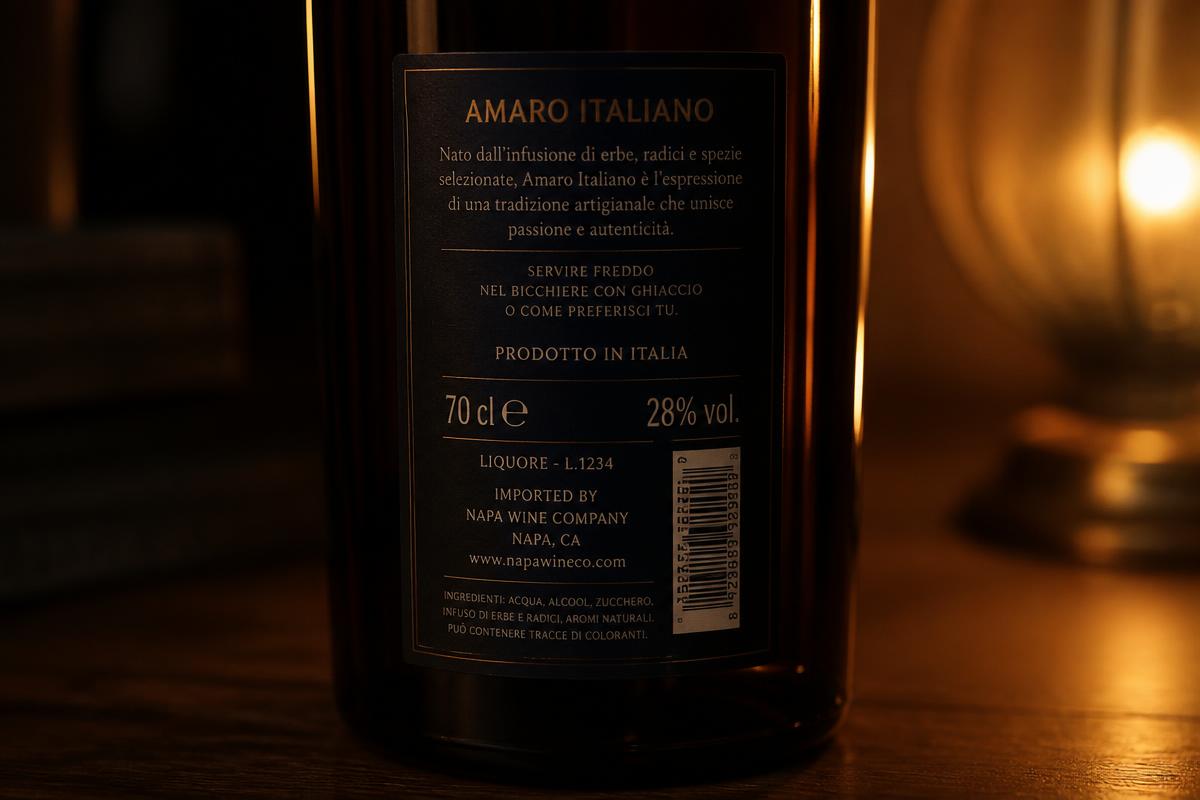
Flip the bottle. The small print is the least romantic and most informative part of the label.
Prodotto in Italia or Prodotto d'Italia confirms Italian production, which is genuinely useful. Imbottigliato da means bottled by; Prodotto da means produced by that firm. On wine labels that contrast carries weight, but on spirits it is weaker than it looks — large groups blend, contract-produce and bottle across sites, so neither phrase is a craft filter.
70 cl / 75 cl / 100 cl is the fill volume; the EU default is 70 cl, and American imports are usually 750 ml, with the occasional 1 L. The Imported by line names the U.S. importer, which is your best clue to availability: if the importer is a large national distributor, your local shop can probably order it.
Ingredienti lists water, alcohol, sugar and — usually vaguely — *infuso di erbe e radici*, an infusion of herbs and roots. Italian producers almost never publish the full botanical bill; the recipe is the asset. Where a botanical list is known or credibly reported, we note it in the encyclopedia entry rather than pretending the label says more than it does.
Lotto or L. followed by digits is the batch code — a traceability marker for the producer. For most amari on a home shelf it is trivia, but for small alpine producers with vintage-dated releases it can matter.
Some label language is regulated, and some is marketing. Knowing which is which saves money.
Riserva is not legally defined for amaro the way it is for wine. It usually signals extra barrel aging or a higher-proof expression — Braulio Riserva genuinely spends longer in Slavonian oak — but the word alone guarantees nothing. Antica ricetta (ancient recipe) and ricetta originale are similarly unregulated.
A founding date — 1845, 1868, 1885 — refers to the house, not the liquid in your hand. Recipes have been reformulated, sugar levels reduced, and ABVs adjusted for export markets more often than the labels suggest.
Geographic seals are mostly a red herring here. Most amari carry no protected designation at all. IGP (Indicazione Geografica Protetta) is a real EU mark, but you will find it on things like Limoncello di Sorrento IGP or certain grappas — not on Averna, Braulio, Fernet-Branca or Montenegro. If you do see DOP, DOCG or IGP on a bottle, read what that specific product's rules require. Barolo Chinato is the example people cite: it must be built on Barolo DOCG wine, but that is wine law written into the Barolo production rules, not an IGP seal on an amaro.
Put it together and the scan is fast. Find the category word for the family. Find the modifier for the dominant botanical. Read the % vol. to place it in the sweet, medium or assertive tier. Flip it for the producer and importer. Ignore the founding date.
That is enough to answer the only two questions that matter at the shelf: will I like this, and how do I serve it. Everything else is depth — and depth is what the encyclopedia is for.
Every entry in our Encyclopedia of Amaro records exactly the fields we just decoded: name and category, region and producer, ABV, known botanicals, history, tasting notes, serving suggestions and where to buy. You can search it, filter by region or producer, and narrow by ABV range — so if you photographed a label in a bar and want the full story later, start there. New to the category entirely? Amaro 101 is the shortest path in.
Category word, modifier, % vol., producer. Four glances and you know what you're buying.
Enjoyed this? Send it around.
Post to X